
Surgery of any kind sounds scary, painful, and an uneasy process, and yet every year, millions of people go through it. With the advancement in robotic-assisted surgery procedures, laparoscopic surgery has become the go-to option for treating conditions like gallstones, appendicitis, hernia, ovarian cysts, endometriosis, and more. Still, most people who are getting a procedure for the first time will always ask questions like “Is laparoscopic surgery painful? How long does pain last after laparoscopy surgery? Is laparoscopic surgery less painful than open surgery? This article will clear all such doubts about laparoscopic surgery myths and facts.
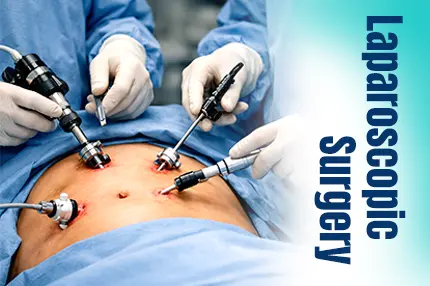
What is laparoscopic surgery? How is it done?
Laparoscopic surgery, also known as minimally invasive surgery, is an operation procedure that is done by making very small cuts, which are often less than 1 cm, instead of making a large opening.
After making the cut, the surgeon inserts a small camera through it (known as laparoscopy), which allows them to see inside the body on an external screen and carry out the operation using sophisticated small medical tools. Minimally invasive surgery pain is very low compared to traditional operations. It’s a common process used for operating on the gallbladder, appendix, hernia, uterus, ovaries, and colon.
Laparoscopic Surgery Myths vs. Laparoscopic Surgery Facts
Myth: Laparoscopic surgery is as painful as open surgery.
Facts: Laparoscopy is one of the least painful surgical processes. Most people assume that all kinds of surgery are painful, but that’s simply not true. Compared to open surgery, which involves cutting through layers of muscles and tissues, laparoscopy is much less traumatic on the body, as it involves a very small incision. This means less tissue damage, less bleeding, and faster recovery, hence much lower pain overall. In most operation surveys it’s noted that patients report laparoscopic pain on a mild to moderate level, not severe.
Myth: You will stay in severe pain after a laparoscopic procedure.
Facts: Pain after laparoscopic surgery is minimal and can be easily managed with standard medication. There will be some discomfort after the procedure; that’s common for any surgical process. However, the pain levels after laparoscopic surgery are generally low enough that they can be easily handled with oral painkillers like ibuprofen or paracetamol. In most cases, patients don’t require painkillers for more than a day or two. You may experience some soreness around the incision area, but it will go away soon. Some people also experience a dull ache in the shoulder or upper back. This discomfort happens because carbon dioxide gas is used to inflate the abdomen during the procedure, and this gas can irritate the diaphragm. It usually fades within 24 to 48 hours.
Myth: Laparoscopic surgery can affect fertility.
Facts: It can actually improve fertility. If done properly, it can remove blockages, scar tissues, and endometriosis lesions, all of which are conditions that can cause infertility. Compared to open surgery, the minimally invasive nature of laparoscopy means far less trauma to the reproductive organs, which greatly lowers the risk of post-surgical scarring.
Myth: Laparoscopic surgery is not suitable for overweight or obese patients. They must always have open surgery instead.
Fact: Obese patients can safely undergo laparoscopic surgery and often benefit more; smaller cuts reduce the risk of wound infection, which is much higher in open surgery for this group. Procedures like weight loss surgery (bariatric surgery) are almost always done laparoscopically. Each case is assessed individually by the surgeon.
Myth: The gas used during laparoscopic surgery is harmful and stays inside your body for a long time after the procedure.
Fact: Carbon dioxide (CO₂) gas is used to inflate the abdomen so the surgeon has space to work. It is completely safe and naturally absorbed by the body within hours. Some patients feel shoulder or back discomfort for a day or two as the gas disperses. This is normal and temporary. The body handles CO₂ the same way it handles the gas you breathe out.
Myth: Laparoscopic surgery always has to be converted to open surgery midway. It’s better to just go for open surgery from the start.
Fact: Conversion to open surgery is rare and only done when it’s the safest option for the patient, not because laparoscopy failed. It happens in roughly 2 to 5% of cases. An experienced surgeon will assess your condition beforehand. If conversion does happen, it is a medical decision, not a complication. Starting with laparoscopy does not put you at greater risk.
Conclusion: Is laparoscopic surgery painful?
Yes, laparoscopic surgery is painful, but only mildly and for a very short time. The pain can easily be managed with OTC painkillers. It is one of the safest and most non-invasive medical procedures. If you have been advised to undergo this procedure, there is no need to worry about pain and recovery. Just talk to your doctor about what to expect, ask questions, and go in prepared. For expert consultation on laparoscopic and robotic surgery, consult an experienced urologist.